SWOOD and Material Management: From Design to Wood Manufacturing

BLOG

SWOOD and Material Management: From Design to Wood Manufacturing

[techtips_featured_image_shortcode]

Material is More Than Just a Visual Appearance

In the furniture, cabinetry, and commercial millwork industries, material selection plays a critical role. It impacts not only product aesthetics, but also manufacturability, cost control, quality, and production repeatability. Yet, in many organizations, material management is still treated as a secondary concern, often limited to a visual texture or a late-stage production note.

As a result, this approach frequently leads to well-known issues. Designers and production teams may face inconsistencies between design and the shop floor, incorrect panel selection, edge banding errors, material waste, and costly rework. In addition, standardizing internal processes becomes much more difficult.

At a time when companies are striving to improve operational efficiency and production reliability, these issues can quickly turn into costly bottlenecks.

This is where the combination of SOLIDWORKS and SWOOD makes a real difference. By integrating intelligent material management directly into the design phase, SWOOD transforms materials into structured, manufacturing-ready data. As a result, this information remains consistent throughout the entire digital workflow.

The Limitations of Material Management in SOLIDWORKS

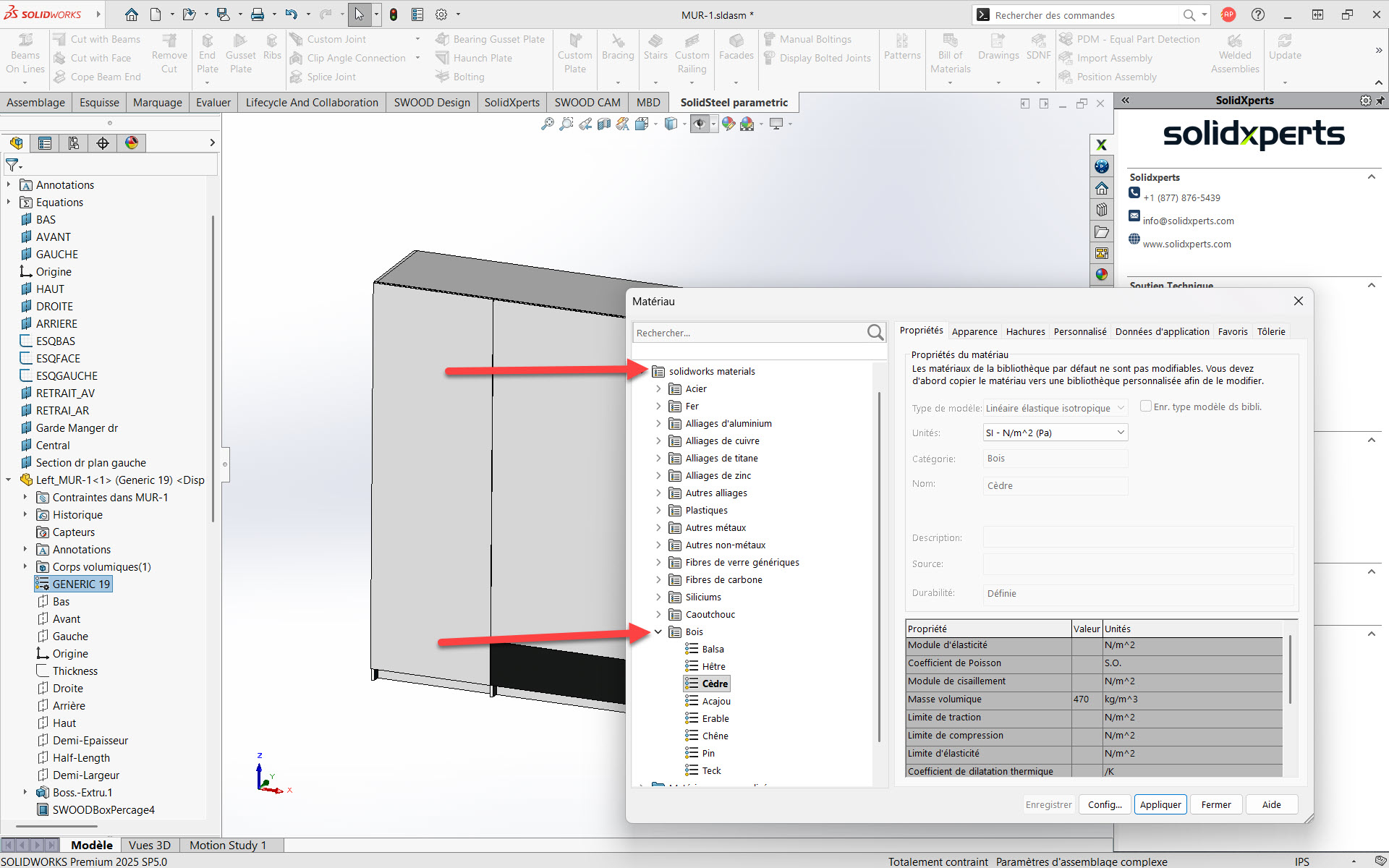
SOLIDWORKS is a powerful and flexible CAD platform, widely recognized for its robustness and parametric capabilities. In addition, it offers advanced material handling for mechanical design, including physical properties, mass calculations, and rendering. However, when applied to wood-based design, certain limitations quickly emerge.

In fact, native SOLIDWORKS materials are primarily intended for mechanical applications. As a result, they do not fully address the realities of wood manufacturing, such as:

  • engineered wood panels,

  • commercial panel thicknesses,

  • wood grain direction,

  • supplier-specific decors,

  • edge banding compatibility,

  • or CNC manufacturing constraints.

As a result, designers often rely on generic materials and manual adjustments. This information remains disconnected from manufacturing processes, forcing production teams to reinterpret design intent. The lack of continuity increases error risks and severely limits automation.

Why Material Management Is Critical in Wood Design?

In wood design, materials are never neutral. A panel is not simply a thickness and a color. Instead, it represents a supplier, a finish, compatible edge banding, machining rules, and cost implications.

Without proper material definition, several issues can arise. For example, poor material management can lead to:

  • incorrect panel usage in production,

  • edge banding mismatches,

  • nesting inefficiencies,

  • inaccurate material cost estimates,

  • and inconsistencies across similar projects.

On the other hand, structured material management allows companies to:

  • ensure design-to-production consistency,

  • reduce manual data entry,

  • improve communication between departments,

  • and secure manufacturing outcomes early in the design process.

In this context, materials become a strategic data asset, just as critical as dimensions or tolerances.

How SWOOD Structures Material Management?

Material Libraries Designed for the Wood Industry

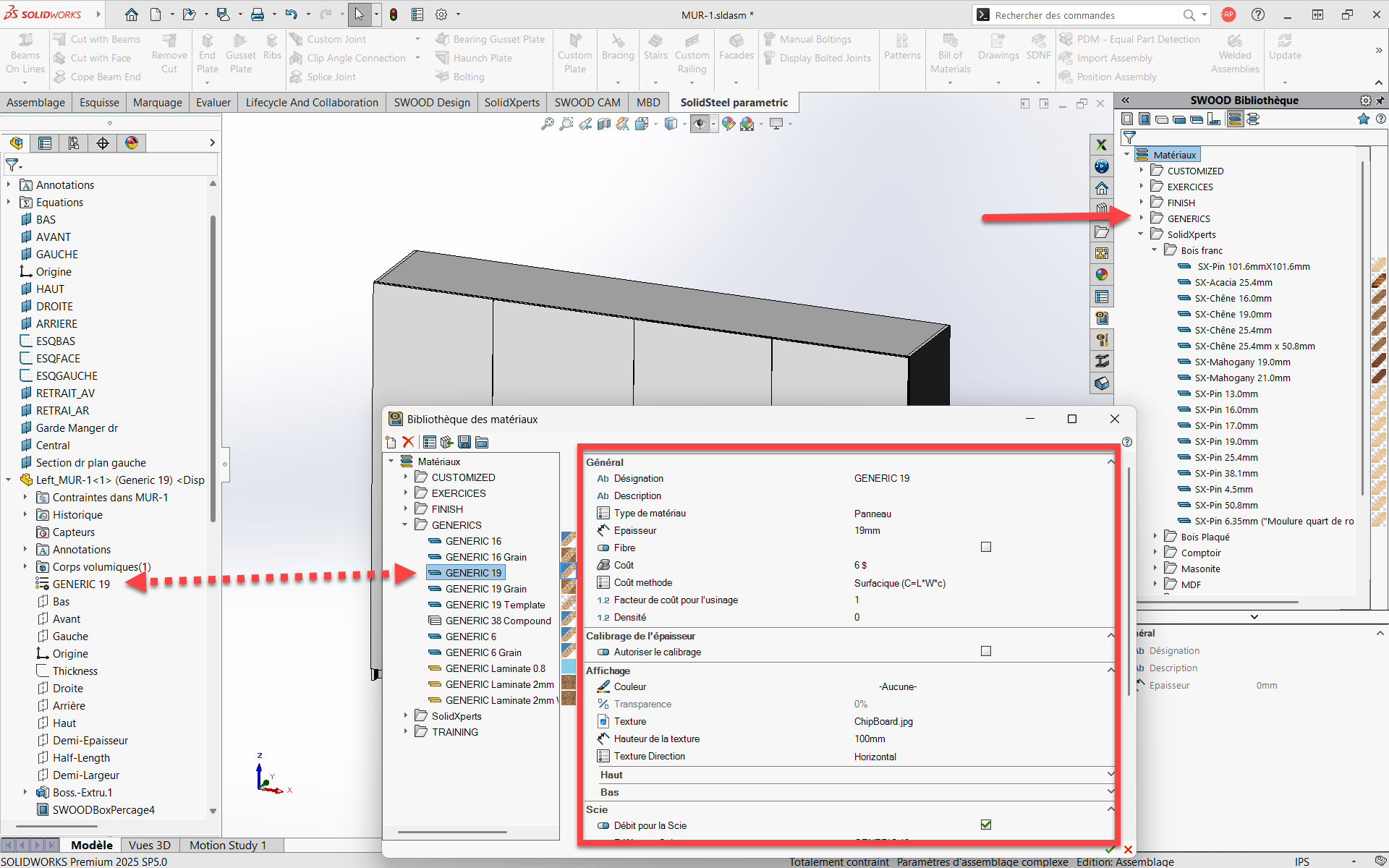
SWOOD introduces material libraries specifically developed for cabinetry, furniture, and millwork professionals. Unlike generic CAD materials, these libraries are designed to reflect real manufacturing requirements. As a result, SWOOD materials include production-relevant parameters such as:

  • actual panel thickness,

  • material type (MDF, melamine, plywood, solid wood, etc.),

  • grain direction,

  • tolerances,

  • and attributes required for bills of materials and cut lists.

These libraries can be standardized company-wide, ensuring consistent practices across all projects and designers.

Direct Link Between Materials and CNC Manufacturing

One of SWOOD’s key strengths is the direct connection between materials and manufacturing processes. Because of this, materials are no longer used only for visualization. Instead, they actively drive CNC machining behavior.

Based on the selected material, SWOOD can:

  • adapt machining strategies,

  • select appropriate tools,

  • control cutting depths,

  • and automatically prepare data for production.

This significantly reduces manual adjustments on the shop floor and improves manufacturing reliability, even for highly customized projects.


Edge Banding and Decor Management

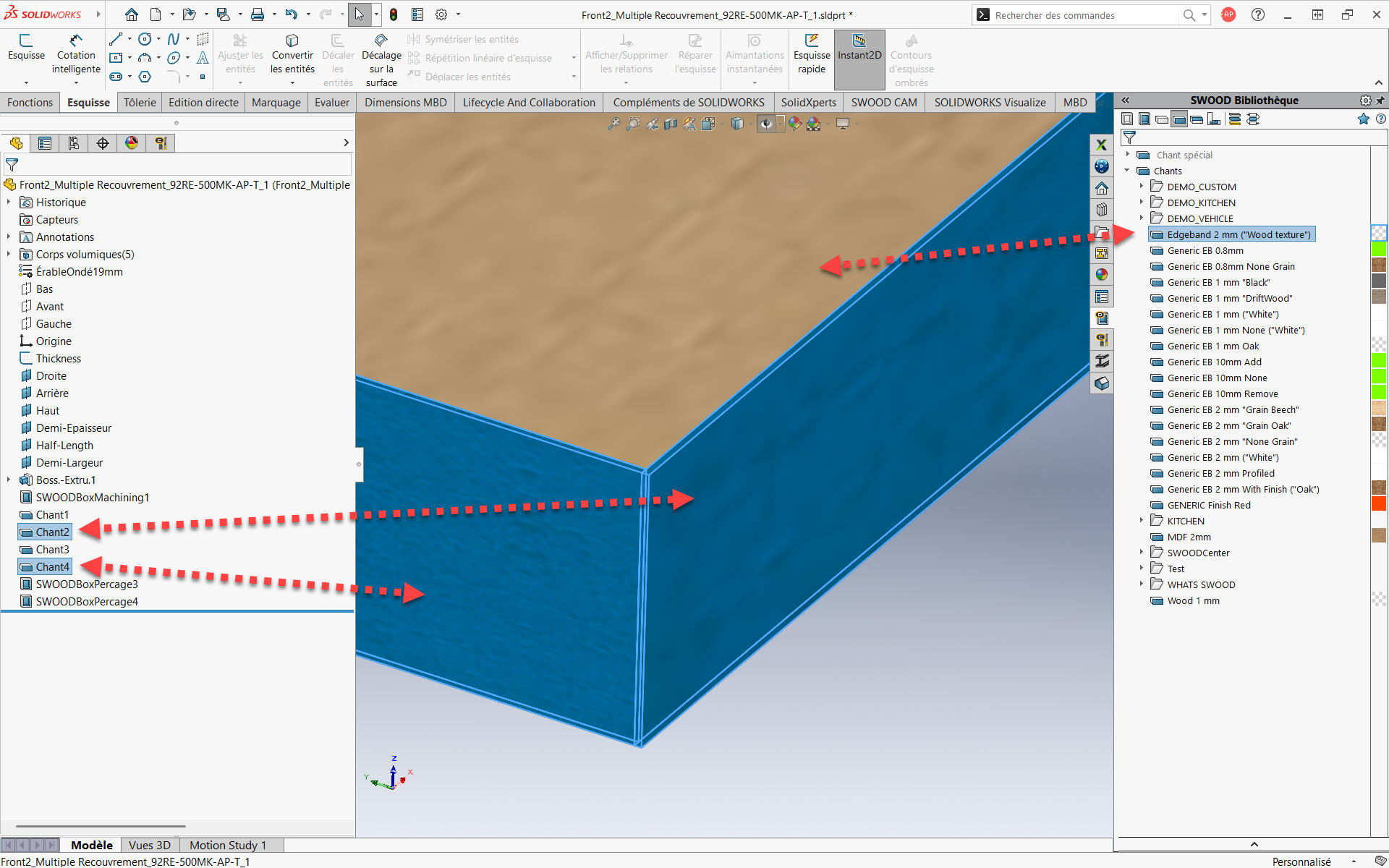
Edge banding is a critical aspect of wood manufacturing. SWOOD enables intelligent associations between panels and compatible edge banding materials.

Decors are not used solely for visualization. They are also embedded into:

  • bills of materials,

  • cut lists,

  • nesting data,

  • and shop floor documentation.

By automating these relationships, SWOOD minimizes human error and ensures consistent data from design through production.

From Design to Manufacturing: A Controlled Digital Continuity

SWOOD is built around the concept of digital continuity. Data defined during design is the same data used for manufacturing, without re-entry or reinterpretation.

A typical workflow includes:

  1. Designing furniture or millwork in SOLIDWORKS with SWOOD Design.

  2. Applying structured, manufacturing-ready materials.

  3. Transferring data directly to SWOOD CAM and SWOOD Nesting.

  4. CNC production driven by consistent and reliable information.

This approach improves traceability, reduces lead times, and increases overall production confidence.

The Impact on Costs and Industrial Performance

Effective material management directly impacts business performance. By integrating materials early in the design phase, companies can:

  • improve material cost estimation accuracy,

  • reduce waste and scrap,

  • optimize panel nesting,

  • standardize internal workflows,

  • and accelerate onboarding of new employees.

These benefits are especially valuable for growing organizations that need scalable and repeatable processes.

Which Companies Benefit Most from SWOOD Material Management?

SWOOD material management is particularly valuable for:

  • furniture manufacturers,

  • commercial millwork companies,

  • industrial cabinet makers,

  • CNC woodworking shops,

  • and organizations seeking to structure or automate their design-to-production workflows.

Regardless of company size, this approach increases reliability, productivity, and competitiveness.

Why SWOOD Is the Best Solution for Wood Design in SOLIDWORKS

SWOOD does not replace SOLIDWORKS, it enhances it. It adds a critical industry-specific layer tailored to wood manufacturing requirements. By combining SOLIDWORKS’ parametric power with SWOOD’s manufacturing intelligence, companies gain a coherent, scalable, and production-oriented environment.

This integration unlocks the full potential of the digital manufacturing chain, from design through CNC production.

Material as a Core Element of the Digital Wood Workflow

In modern wood manufacturing, materials can no longer be treated as simple visual properties. Instead, they must be managed as essential design and manufacturing data that supports the entire production process.

When material management is structured properly, companies gain much better control over their operations. With SWOOD, wood manufacturers can reduce errors, better control material costs, and improve overall production reliability.

Ultimately, integrating materials early in the design phase helps create a more consistent and efficient workflow from design to manufacturing.

Looking to improve your material management and secure your digital workflow from design to production? Solidxperts helps wood manufacturing companies implement SWOOD, train their teams, and optimize their design-to-production processes.

FAQ

What are the financial benefits of materials management with SWOOD?

Materials management with SWOOD reduces manufacturing errors, rework, and material waste. By standardizing materials from the design stage, companies improve the accuracy of cost estimates, optimize nesting, and reduce scrap, generating a measurable return on investment from the very first projects.

How does SWOOD contribute to reducing production errors?

SWOOD eliminates information gaps between the design office and the shop floor. Materials defined during the design phase are used directly in CNC manufacturing, without re-entry. This digital continuity significantly reduces errors related to incorrect panels, incompatible edges, or incorrect machining parameters.

Does SWOOD improve the productivity of the design office?

Yes. By using standardized material libraries, designers spend less time checking or correcting material information. Projects are faster to design, more consistent, and easier to reuse, improving overall engineering productivity.

What is the impact of SWOOD on time to market?

By reducing manual approvals and last-minute adjustments, SWOOD accelerates the transition from design to manufacturing. With reliable data from the design stage, time to market is shortened and bottlenecks between departments are reduced.

Does managing materials with SWOOD facilitate company growth?

Yes. SWOOD helps structure internal processes, which is essential for supporting growth. Standardized practices, reduced reliance on key experts, and faster onboarding of new employees allow the company to grow without a proportional increase in operational risks.

How can the ROI be concretely measured after implementing SWOOD?

ROI can be measured through several indicators: reduced scrap, shorter design time, fewer production errors, improved panel utilization, and shorter delivery times. These indicators are easily observable before and after implementation.

Is SWOOD profitable for a wood industry SME?

SWOOD is particularly well-suited to SMEs. The gains from reduced errors, optimized material usage, and improved productivity quickly offset the initial investment. Many SMEs see a return on investment within a few months, especially when producing diverse or custom projects.

Does SWOOD help secure internal knowledge and standards?

Yes. SWOOD’s material libraries and design rules allow for the formalization of company standards. This reduces reliance on individual knowledge and safeguards expertise, even in the event of staff turnover.


Alain

Alain Provost

Senior Technical Sales Executive

X_green_halo

Any questions? Need help? Ask one of our experts.

Whether you’re ready to get started or just have a few more questions, you can contact us toll-free:
    Artificial Intelligence in Engineering: Automation Without Losing the Human Touch

    BLOG

    Artificial Intelligence in Engineering: Automation Without Losing the Human Touch

    [techtips_featured_image_shortcode]

    Artificial intelligence (AI) is playing an increasingly important role in engineering processes, particularly when it comes to automating repetitive tasks and accelerating the production of technical documentation. However, its role remains fundamentally complementary to that of engineers. Creativity, domain expertise, and decision-making responsibility remain human.

    In this article, we explore:

    • what AI concretely brings to engineering

    • which tasks remain (and will remain) human

    • how to organize an effective human–machine collaboration

    • and what this means for the engineering profession

    1. What AI concretely brings to engineering

    1.1 Automating repetitive, low-value tasks

    The daily work of engineering teams is filled with essential but repetitive tasks that consume a great deal of time without fully leveraging engineers’ expertise. This is precisely where AI excels.

    A typical example is generating technical drawings from 3D models.

    Traditionally, producing technical drawings involves:

    • manually creating the different views (front, section, detail views)

    • applying dimensioning and tolerancing standards

    • reusing elements from previous projects, often manually

    • performing successive checks for consistency and compliance

    With AI, a large portion of this work can be:

    • automated: generating technical drawings directly from 3D designs

    • contextualized: taking into account company history, internal standards, and previously validated models

    The result: fewer repetitive clicks and more time for analysis and improvement.

    1.2 Measurable efficiency gains

    The operational impact is far from marginal.

    Where dozens of people were previously needed to produce, adjust, and verify detailed drawings, organizations can now concentrate human work within a smaller team of reviewers responsible for:

    • correcting the remaining inconsistencies

    • validating compliance

    • managing special cases not covered by the models

    AI handles the repetitive heavy lifting. Humans focus on quality, reliability, and exception management.

    2. Tasks that remain (and will remain) human

    Despite these gains, certain activities remain difficult to automate and may remain so in the short and medium term.

    2.1 Creative design and early project phases

    The early stages of a project, when the architecture of a product and the major technical choices are defined, rely on:

    • creativity

    • accumulated domain expertise

    • the ability to integrate sometimes ambiguous constraints (real-world usage, environment, maintenance, ergonomics)

    • complex decision-making that affects overall product performance

    These activities require systemic understanding, multi-criteria trade-offs, and a form of intuition that current AI models cannot replicate.

    2.2 Safety, compliance, and responsibility

    A clear example is the design of powerful machinery.

    Engineers must:

    • integrate safety factors to protect users

    • sometimes introduce additional margins based on experience or real-world conditions that are difficult to simulate

    These decisions directly affect safety, regulatory compliance, and legal responsibility.

    Today, these types of decisions cannot be delegated to AI.
    Decision-making responsibility remains with humans, not algorithms.

    3. Toward intelligent human–machine collaboration

    The key question is therefore not whether AI will replace engineers, but how to organize an effective collaboration between the two.

    3.1 AI as a copilot during design

    During the design process, AI can act as a copilot or technical assistant. For example, it can:

    • propose lighter materials that still meet strength requirements

    • suggest geometric variations to reduce weight or improve rigidity

    • quickly analyze the impact of small design changes on overall performance

    In practice, engineers can ask AI questions such as:

    • “Which materials meet these strength and weight constraints?”

    • “What geometric alternatives could reduce the mass by 10 percent?”

    However, final validation, trade-off decisions, and system integration remain the responsibility of the engineer.

    3.2 AI as an analyst for standardized tasks

    For more standardized analytical tasks, AI becomes a particularly useful engineering assistant. It can support:

    • the processing and structuring of large volumes of data

    • the automatic generation of variants for comparative studies

    • consistency checks across large sets of technical documentation

    This allows teams to explore more possibilities in less time, without removing the engineer from the decision-making process.

    4. Should engineers fear being replaced by AI?

    The fear of being replaced by machines is real and understandable, especially in technical professions.

    4.1 Vulnerable jobs vs resilient jobs

    A job is more exposed to automation when its tasks are:

    • repetitive

    • highly standardized

    • not very creative

    • associated with limited decision-making

    In contrast, a job is more resilient when it involves:

    • significant creativity

    • a global understanding of complex systems

    • multi-criteria trade-offs (cost, performance, risk, environmental impact)

    • strong responsibility for safety, compliance, or performance

    In engineering, activities such as:

    • defining a product’s overall architecture

    • breakthrough innovation

    • high-impact technical decisions

    • field responsibility

    remain firmly within the human domain.

    4.2 A change in role rather than disappearance

    Consider the example of technical documentation.

    Yes, AI can generate documents based on validated models or historical data.

    No, it does not replace engineers when it comes to:

    • critical decision-making

    • technical trade-offs

    • creative innovation

    What changes most is how time is allocated:

    • less manual and repetitive production work

    • more design, analysis, validation, and innovation

    Toward augmented engineering, not automated engineering

    Artificial intelligence brings real value to engineering by:

    • automating repetitive, low-value tasks

    • accelerating the generation of drawings and technical documentation

    • assisting engineers in exploring design alternatives and performing analysis

    However, creativity, domain expertise, and responsibility remain central to the engineer’s role.

    The goal is not to replace humans, but to build intelligent collaboration:

    • letting AI handle what it does best (speed, repetition, scale)

    • preserving what defines engineering expertise: inventing, evaluating trade-offs, and taking responsibility for decisions

    The future of engineering will not be “human or AI,” but clearly human + AI: augmented engineering that is more efficient, safer, and more focused on innovation.


    Benoit Bilodeau

    Senior Solutions Architect

    X_green_halo

    Any questions? Need help? Ask one of our experts.

    Whether you’re ready to get started or just have a few more questions, you can contact us toll-free:
      How to Define Bonded Interactions in SOLIDWORKS Simulation: A Practical Case Study

      BLOG

      How to Define Bonded Interactions in SOLIDWORKS Simulation: A Practical Case Study

      [techtips_featured_image_shortcode]

      Are you wondering which interaction type should be used in SOLIDWORKS Simulation to represent a weld or to attach two bodies so they do not separate during the analysis?

      Think about a bracket supporting critical components of a product. What must be done to ensure that the simulation accurately represents the real behavior before running the analysis?

      After reading this blog, you will be familiar with the key steps required to properly define bonded interactions in SOLIDWORKS Simulation. 

      Representation of the bonded interaction

      In SOLIDWORKS Simulation, a bonded interaction is used to connect two or more bodies so that no relative motion is allowed at their interface. A typical example is welding a bracket to another component to reinforce a structure and reduce stress in critical areas.

      A bonded interaction is equivalent to merging bodies while still allowing each part to retain its own material properties. Once defined, the connected bodies are assumed to never separate during the analysis. This represents an idealized, perfectly rigid weld. While such a condition does not exist in reality, it is often a reasonable and efficient assumption when a near-perfect weld behavior is expected.

      A bonded interaction should not be used to represent a contact condition (formerly called No Penetration) or any situation where sliding between components is expected.

      In some cases, however, it may be acceptable to use a bonded interaction instead of defining multiple contact conditions in order to simplify the analysis. An example is a threaded rod, where detailed local behavior is not required and where the objective is to capture the global structural response rather than local stresses.

      Mesh refinement plays a key role in obtaining accurate results near bonded interaction regions. Adjusting the global mesh parameters or applying local mesh controls can significantly improve mesh consistency at the interface and help ensure reliable and meaningful results.

      Modeling Assumptions: Using Bonded Interactions in a Welded Structure

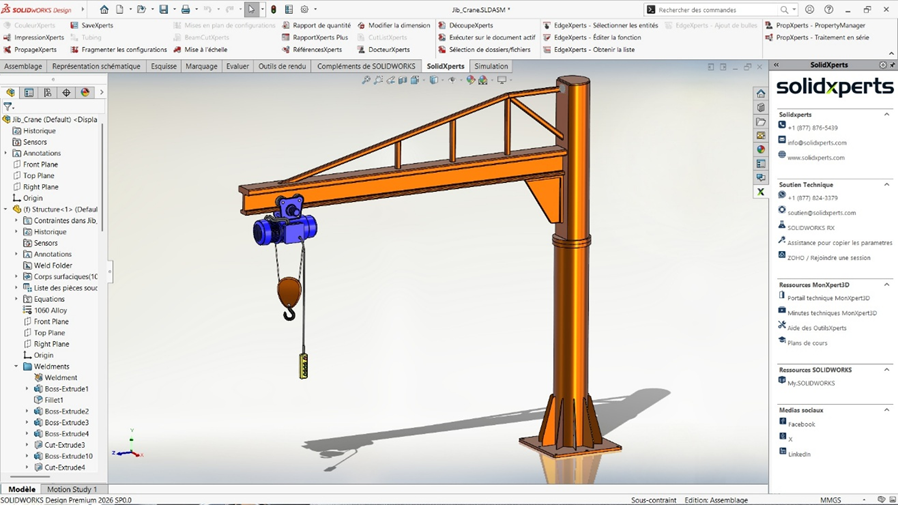
      We are going to consider the following case study to illustrate the bonded interaction application. See the image below:

      Jib crane case study highlighting potential bonded interaction locations
      Jib crane case study highlighting potential bonded interaction locations

      In this jib crane case study, the gusset parts are welded to the column and base plate to increase the overall resistance of the local area. Because of the nature of the problem, we make the assumption that the parts are tied together and that there is no relative motion between them. Therefore, we can apply a bonded interaction at this location to represent multiple welding interactions.

      Please note that it is not necessary to model the weld as a separate part or body in SOLIDWORKS. This simplifies both the model and the analyst’s work while requiring only minimal additional information.

      As with any modeling assumption, the use of bonded interactions should always be aligned with the objectives of the analysis and the level of accuracy required.

      Global vs Local Bonded Interactions: Setup and Best Practices

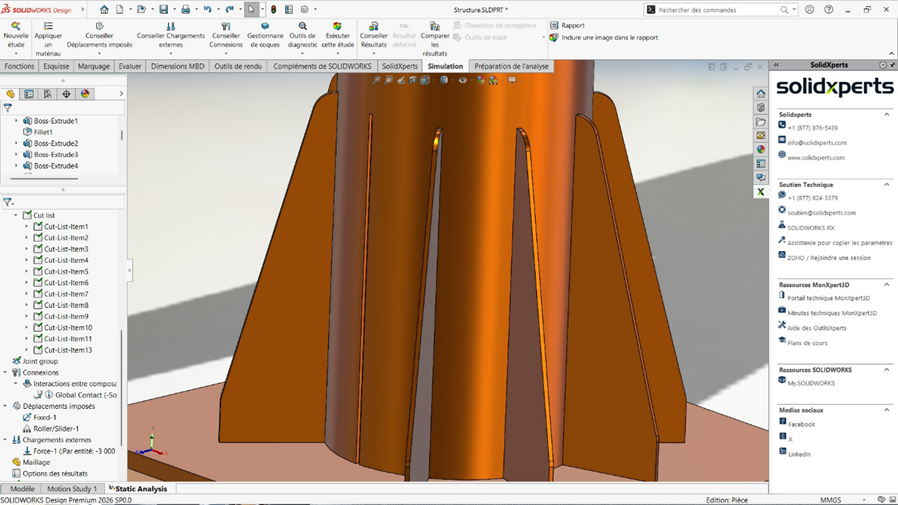
      Here we are, the most sought after section of this blog on how to define the bonded interaction. There are several ways to define bonded interactions in SOLIDWORKS Simulation. The good news is that the default option when creating a stress analysis with SOLIDWORKS Simulation is set to apply a bonded interaction at a global level. This means that for coincident solid bodies, no additional interaction definition is required as long as the global interaction type is set to Bonded. The global bonded interaction can be found in the Simulation Tree in the Connections folder, under Component Interactions. Additional options can be set to take into account a gap between the bodies. The following image shows a case where a bonded interaction already defined by default could already be sufficient, meaning that there is no additional required step:

       Alternative jib crane design where the gussets fit into slotted holes
      Alternative jib crane design where the gussets fit into slotted holes

      In some specific cases, a bonded interaction must be defined at a local level which requires a definition in the software. It could be the case of parts with different mesh types or geometry inconsistencies. Let’s consider the case study where there is a small gap between the gusset and the column where a bonded interaction is needed to represent a welding.

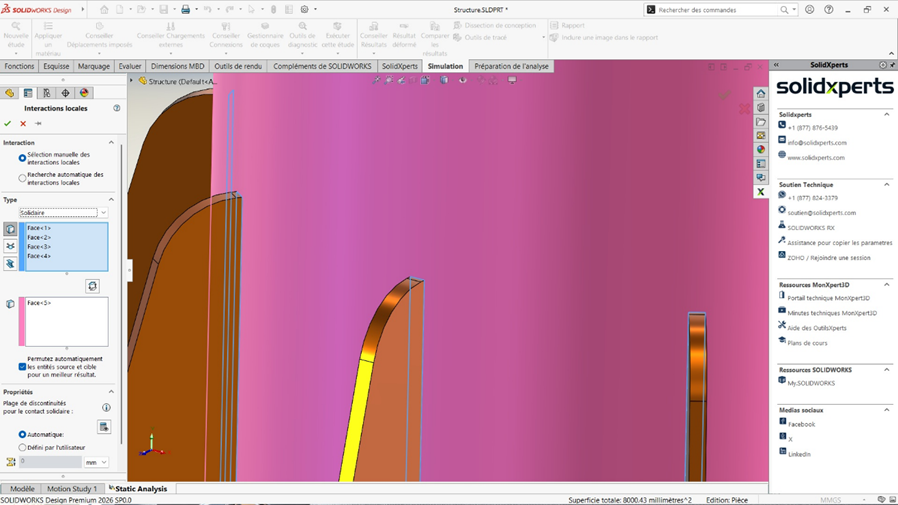
      To define a local bonded interaction:

      1. In the Simulation Tree, right-click Connections and select Local Interaction.

      1. In Type, choose Bonded.

      1. In the blue selection box, select the first entity (ideally the smaller one).

      1. In the pink selection box, select the second entity (ideally the larger one).

      1. Multiple entities can be selected if required.

      1. If necessary, define additional options such as the gap tolerance.

      Local bonded interaction definition
      Local bonded interaction definition

      Interpreting Results When Using Bonded Interactions

      When the calculations complete and that we are at the step of validating the results, it is very important to understand how they should be interpreted. Adding unnecessary bonded interactions tends to artificially increase the stiffness of the structure. This can make the model appear stronger than it actually is, resulting in a non-conservative analysis. Therefore, it is important to keep that in mind and make sure that the analysis represents the real case study appropriately. An animation of the results is an excellent way to determine whether or not the structure behaves as it should be. Expect stress concentrations near edges with bonded interactions and pay attention to stress singularities. If necessary, plot the reaction forces and compare them with the applied loads. If the results don’t make sense, it is important to consider reviewing the analysis setup and rerunning the analysis.

      Key Takeaways on Bonded Interactions in SOLIDWORKS Simulation

      In this blog, we explored the application of bonded interactions to better understand their meaning and areas of use.

      Through the lifting jib crane case study, we illustrated the creation of both global and local bonded interactions. In Finite Element Analysis (FEA), the quality of results depends primarily on the relevance of your modeling assumptions and choices.

      Beyond interactions, there are other features that must be used properly to produce reliable simulations tailored to your objectives. If you wish to deepen your knowledge of SOLIDWORKS Simulation, several resources are available to support your progress.

      You can visit our website to read our other technical blogs and learn more: https://www.solidxperts.com/en/blog/


      Chung Ping Lu, eng.

      Chung Ping Lu, eng.

      Senior Technical Representative

      X_green_halo

      Any questions? Need help? Ask one of our experts.

      Whether you’re ready to get started or just have a few more questions, you can contact us toll-free:
        Managing Your 3DEXPERIENCE Cache: Keep Your Files Clean and Up to Date

        BLOG

        Managing Your 3DEXPERIENCE Cache: Keep Your Files Clean and Up to Date

        [techtips_featured_image_shortcode]

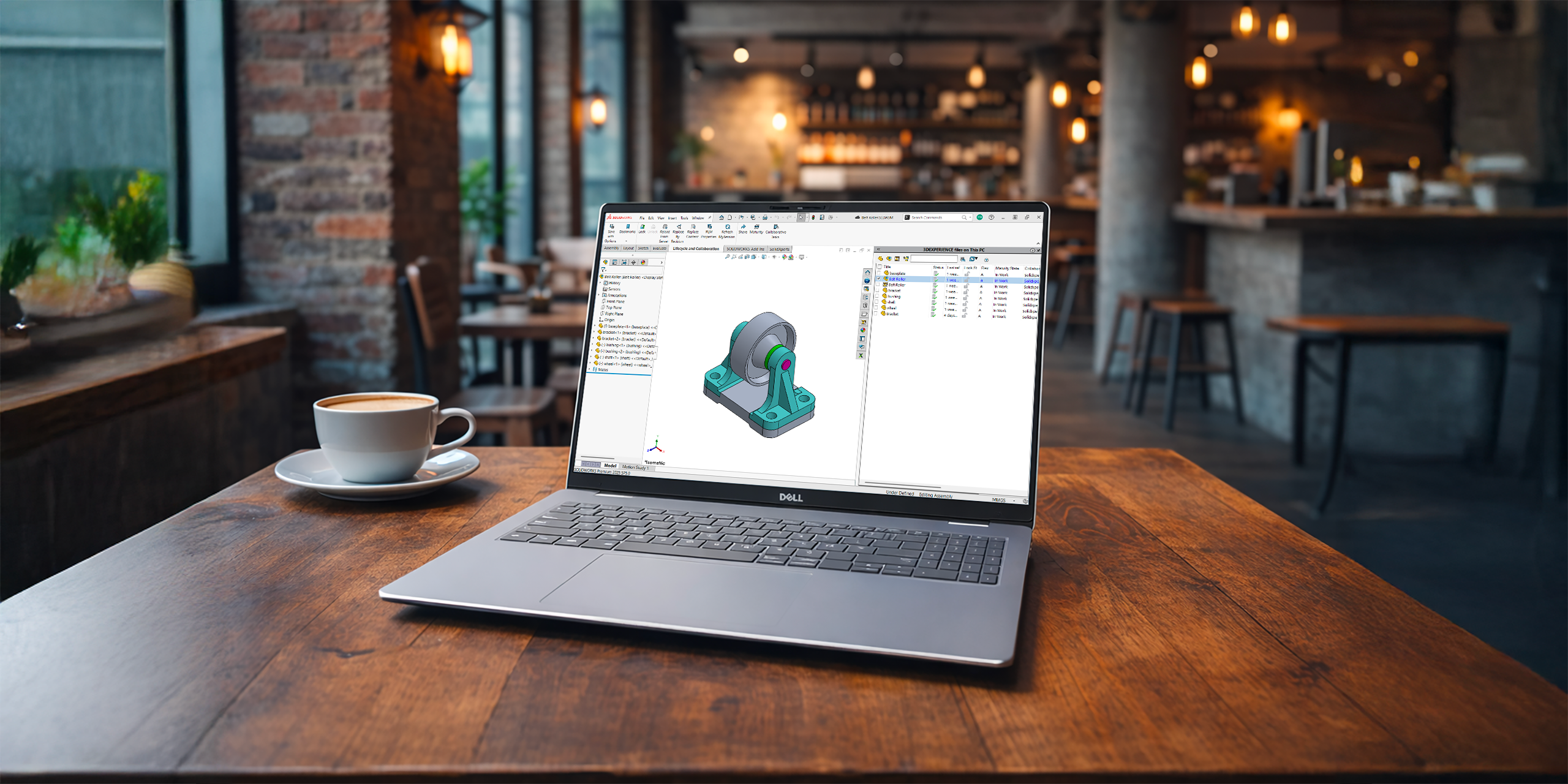
        One of the biggest advantages of the 3DEXPERIENCE platform is having your files stored securely in the cloud. You can access your designs anytime, anywhere, and collaborate with teammates without worrying about version control.

        Behind the scenes, SOLIDWORKS uses a local cache, a folder on your computer where files are temporarily stored while you work. These cached files are then synced with the 3DEXPERIENCE servers when you save or refresh.

        Managing this cache is key to keeping your designs current, preventing confusion, and saving disk space. Let’s take a closer look.

        Where to Find the 3DEXPERIENCE Cache

        Think of 6W Tags as smart labels that make it easy to filter, sort, and find your files in 3DSpace or 3DDrive.

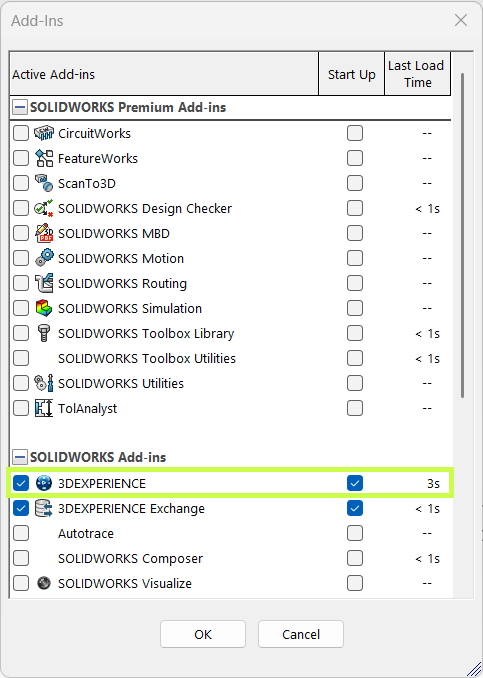
        Your cache shows up both in SOLIDWORKS (via the 3DEXPERIENCE add-in) and in Windows Explorer. While you can browse the cache folders directly, we don’t recommend managing them that way. Instead, stick to the tools built into SOLIDWORKS.

        Here are the default folder locations:

        • SOLIDWORKS Desktop with the 3DEXPERIENCE add-in:
          C:\3DEXPERIENCE

        • SOLIDWORKS Connected:
          C:\Users\<username>\AppData\Local\DassaultSystemes\3DEXPERIENCE

        Managing the Cache Inside SOLIDWORKS

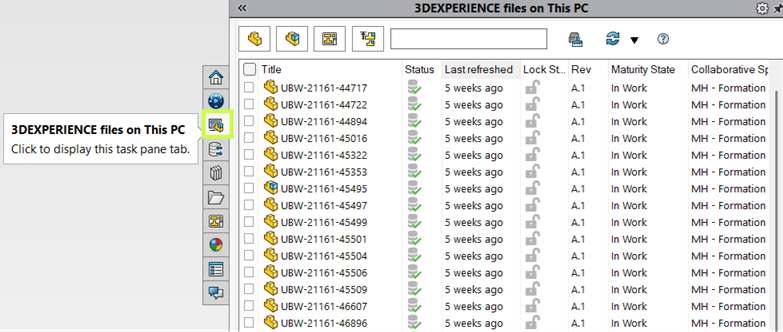
        When you enable the “3DEXPERIENCE Files on This PC” add-in, you’ll see a dedicated tab in the Task Pane. This view shows you all cached files with helpful details like:

        • Status

        • Lock Status

        • Maturity State

        ub / Managing Your 3DEXPERIENCE Cache

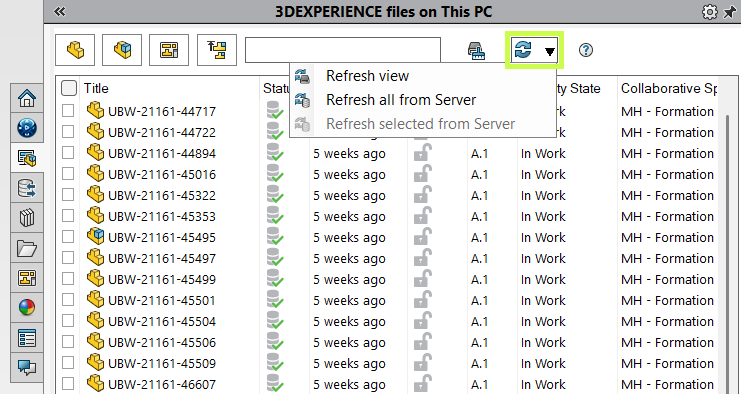
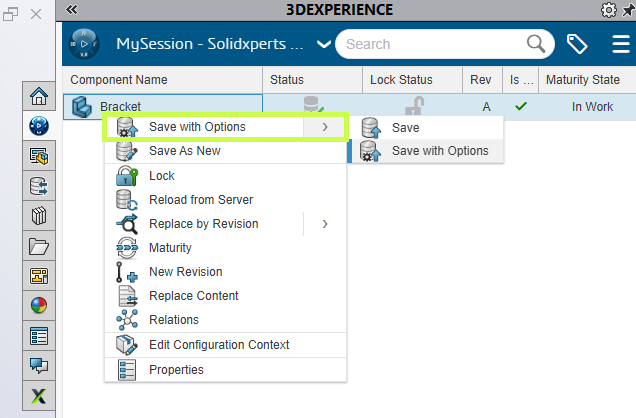
        From here, you can quickly refresh your cache to make sure you’re always working with the latest version.

        • Refresh View updates the local cache for selected files.

        • Refresh from Server checks for changes made by other users and downloads the latest copy if needed.

        • Starting a new SOLIDWORKS session automatically refreshes files in the background.

        ub / Managing Your 3DEXPERIENCE Cache - 2

        Understanding Cache Status Icons

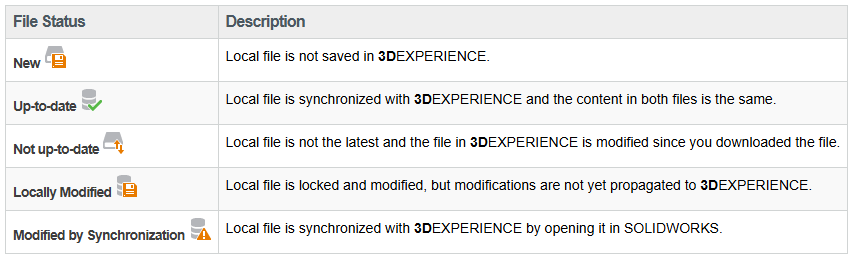
        The status icons make it easy to tell if your local files are current, out-of-date, or waiting to be uploaded. They also warn you if refreshing would overwrite changes you’ve made locally.

        ub / Managing Your 3DEXPERIENCE Cache - Icons

        Pro tip: Always double-check before reloading from the server. Unsaved local edits will be lost.

        Cleaning Up the 3DEXPERIENCE Cache

        Over time, cached files can pile up and take up space. To keep things tidy (and ensure you’re pulling the latest versions from the cloud), it’s a good idea to clean your cache periodically.

        Here’s how:

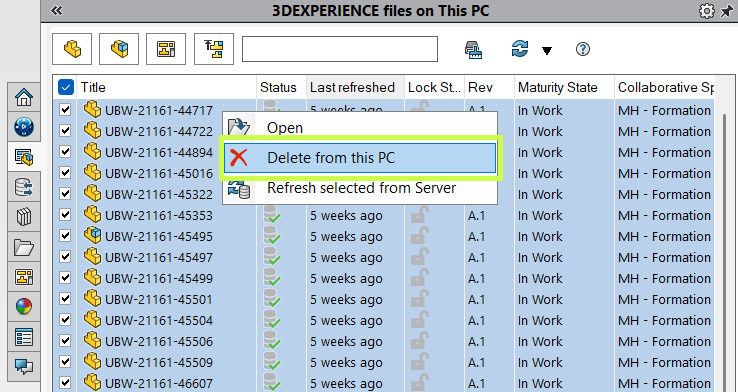
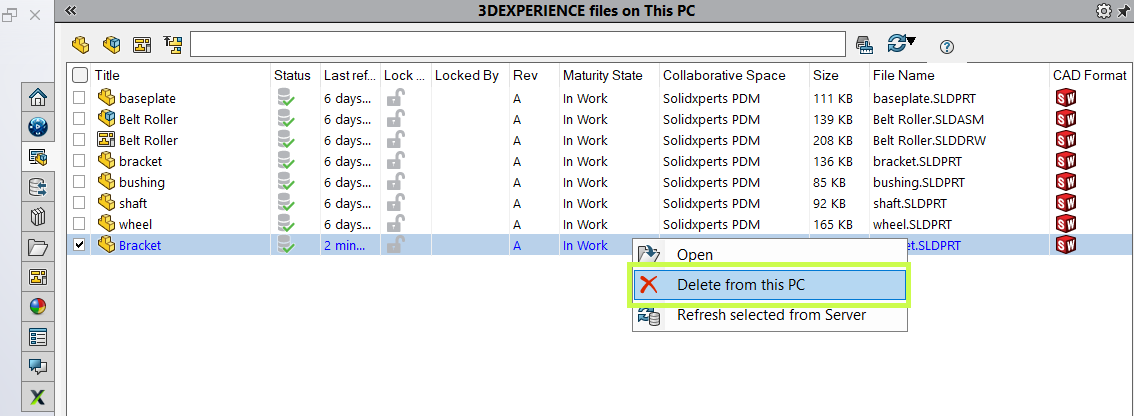
        1. In the Task Pane, select individual files, or use the top-left checkbox to select all.

        2. Right-click and choose Delete from this PC.”

        ub / Managing Your 3DEXPERIENCE Cache - Delete

        This only removes files from your local cache. Your data stays safe in the 3DEXPERIENCE platform.

        You can also use:

        • Filters to find specific file types.

        • The search box to locate files quickly.

        And before you delete, always confirm your files are saved and synced to the platform.

        Automating Cache Clean-Up

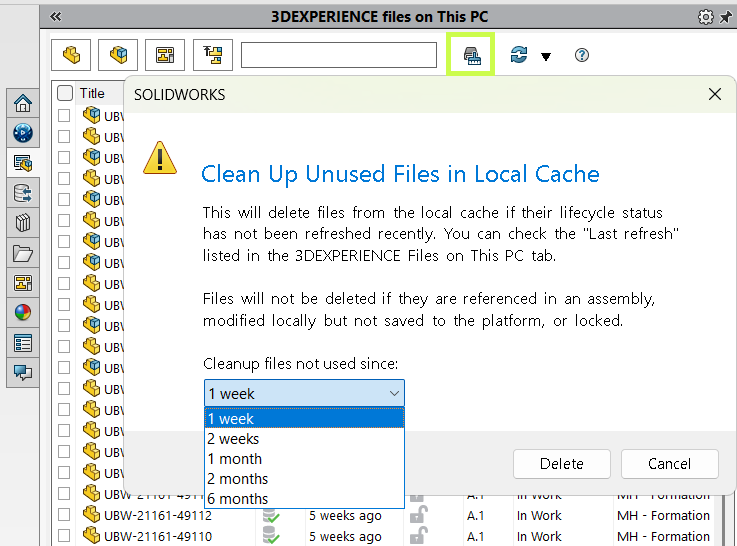
        Don’t want to do it manually? The Clean Up command takes care of it for you.

        • By default, it removes unchanged files older than one week.

        • Locked or modified files won’t be touched.

        • If you open an assembly later, any missing references are automatically redownloaded from the server.

        ub / Managing Your 3DEXPERIENCE Cache - Automation

        If disk space isn’t a concern, you can extend the timeframe to reduce how often files get cleared. It is especially useful if your internet connection is slow.

        A Simple Habit for Staying Up to Date

        The local 3DEXPERIENCE cache is like a bridge between your desktop and the cloud. Keep it clean, refresh it often, and you’ll always know you’re working with the latest designs.

        Want to get even more out of your 3DEXPERIENCE platform? Our training sessions are designed to help you and your team take full advantage of its powerful tools.


        Michael Habrich

        3DEXPERIENCE Specialist

        LinkedIn

        X_green_halo

        Any questions? Need help? Ask one of our experts.

        Whether you’re ready to get started or just have a few more questions, you can contact us toll-free:
          Make Your Data Work for You with 6W Tags on the 3DEXPERIENCE Platform

          BLOG

          Make Your Data Work for You with 6W Tags on the 3DEXPERIENCE Platform

          [techtips_featured_image_shortcode]

          The 3DEXPERIENCE platform isn’t just about CAD in the cloud. It’s your all-in-one workspace where design, data management, and collaboration come together. Whether you’re sketching with xShape, modeling in xDesign, or connecting to SOLIDWORKS, the platform helps keep everything, and everyone, in sync.
          But let’s be honest: every engineering project generates mountains of data. 3D models, drawings, BOMs, simulations, even invoices and Word docs. It all piles up. The good news? The platform makes it easy to organize and navigate this information with a powerful tool called 6W Tags.

          What Are 6W Tags?

          Think of 6W Tags as smart labels that make it easy to filter, sort, and find your files in 3DSpace or 3DDrive.

          6W Tags in SOLIDWORKS

          And it’s not just CAD data. Office documents, simulation results, and more can all benefit from tagging.

          Here’s how the 6Ws break down:

          • What: Type of content (CAD models, documents, simulations, tasks, etc.)
          • Who: The person who uploaded, edited, revised, or owns the data
          • When: Date or time range
          • Where: Geolocation or data source
          • How: Manufacturing method (made in-house or purchased)
          • Why: Links to project or task management

          Out of the box, the system automatically fills in basics like owner, location, and save date. But the real power comes when your team adds custom tags. For example, you can include project numbers, material types, or vendor names so searches are tailored to your company’s workflow.

          How to Use 6W Tags

          Let’s say you search for “bolt” in 3DEXPERIENCE. Without filters, you might get hundreds (if not thousands) of results. That’s where 6W Tags shine.

          Search bar for 6W Tags in SOLIDWORKS

          Click the tag icon next to the search bar, then start narrowing your results. For example:

          • Under What, choose Physical Product (to exclude tasks or documents).
          • Add a Material filter for Stainless Steel.

          By stacking filters, your results go from overwhelming to precise in just a few clicks.

          Real-World Examples

          In one test, a simple search brought back over 1,000 results. But after filtering with 6W Tags for “Physical Product” and “Plain Carbon Steel,” the number of results dropped down to two digits. That’s the power of smart filtering.

          Beyond search, 6W Tags can be used visually inside apps. For example, parts can be color-coded by material in the graphics area, giving you an instant overview of your design.

          From Data Overload to Data Control

          Data shouldn’t slow you down and with 6W Tags, it won’t. Whether you’re hunting down a single file or organizing entire projects, the 3DEXPERIENCE platform helps you stay in control.

          Want to learn more tips like this? Our experts at Solidxperts can help you get the most out of your 3DEXPERIENCE environment. Reach out anytime or join one of our training sessions!


          Michael Habrich

          3DEXPERIENCE Specialist

          LinkedIn

          X_green_halo

          Any questions? Need help? Ask one of our experts.

          Whether you’re ready to get started or just have a few more questions, you can contact us toll-free:

            Organizing and Managing Your SOLIDWORKS Libraries in 3DEXPERIENCE

            BLOG

            Organizing and Managing Your SOLIDWORKS Libraries in 3DEXPERIENCE

            [techtips_featured_image_shortcode]

            One of the biggest strengths of the 3DEXPERIENCE platform is how it brings your team together. With SOLIDWORKS Cloud Services, you get built-in data management, making it simple to collaborate with colleagues, keep projects organized, and even access your designs on the go.

            Whether you’re working in SOLIDWORKS Connected or traditional SOLIDWORKS combined with Collaborative Designer for SOLIDWORKS, you have a direct link to the 3DEXPERIENCE platform, so opening, saving, and managing your model data feels seamless.

            But here’s the thing: design work goes beyond just parts and assemblies. You also rely on libraries, weldment profiles, sheet metal gauge tables, templates, routing components, and more. Keeping those libraries in sync across your team is just as important as managing your models. And with 3DEXPERIENCE, you can centralize those libraries too.

            Step 1: Create Your Library Structure

            Start in the Bookmark Editor app (in your web browser). Create a clean folder structure for your templates and libraries, with subfolders for each type. Then, simply drag and drop your files into place.

            This way, your team has one organized hub for all shared resources.

            Step 2: Set Up Weldment Profiles

            For weldments, it’s best to stick with a consistent naming convention: Standard → Type → Size.

            We also recommend customizing your standard names to keep them separate from the defaults SOLIDWORKS provides. For example, you might create a standard called “Xperts – ANSI Inch”.

            Once you’ve named things properly, drag your weldment profile files (or entire folders) from Windows File Explorer directly into your 3DEXPERIENCE bookmark. Quick, easy, and ready to use.

            Step 3: Connect Libraries to SOLIDWORKS

            Inside SOLIDWORKS, go to System Options → File Locations. When you add a new location, choose “Select from 3DEXPERIENCE”.

            This links SOLIDWORKS to your bookmarks, syncing the content down to your local cache (usually found at C:\Users\Public\Documents\SOLIDWORKS). You’ll notice the linked locations show up in brackets, confirming they’re tied to the platform.

            To make sure you’re always up to date, just click Update. SOLIDWORKS will pull the latest versions from 3DEXPERIENCE, keeping your whole team in sync.

            Step 4: Keep Your Libraries Updated

            Need to update a file? Head back into the Bookmark Editor in your browser, right-click the file, and select Update. Browse for the new version locally, and the platform will take care of the rest.

            Once it’s updated in 3DEXPERIENCE, users just need to hit Update in their SOLIDWORKS options to refresh their local cache. Simple, controlled, and consistent.

            Why This Matters

            Storing your libraries and templates alongside your design data gives you the same benefits: revision control, lifecycle management, and a single source of truth for your team.

            We focused on weldment profiles here, but the same approach works for routing components, sheet metal gauge tables, and more. With SOLIDWORKS Cloud Services + 3DEXPERIENCE, you’re not just managing files. You’re creating a smarter, more connected workflow for your entire team.

            At Solidxperts, we love helping teams get the most out of their tools. Setting up your libraries in 3DEXPERIENCE is a small step that makes a big impact on collaboration, efficiency, and design quality.


            Michael Habrich

            3DEXPERIENCE Specialist

            LinkedIn

            X_green_halo

            Any questions? Need help? Ask one of our experts.

            Whether you’re ready to get started or just have a few more questions, you can contact us toll-free:
              How to Back Up Your 3DEXPERIENCE Data

              BLOG

              How to Back Up Your 3DEXPERIENCE Data

              [techtips_featured_image_shortcode]

              Backing up your data is always a smart move. The good news is that the 3DEXPERIENCE platform already includes secure cloud storage, but sometimes you may want to create a local, on-site backup as well.

              To help you do that, this guide walks you through two options:

              1. Exporting one project at a time (top-level assembly in its own .zip file)

              2. Exporting everything together (all data in a single .zip file)

              Option 1: Export a Single Project

              This method is perfect if you only need to back up a specific assembly or project.

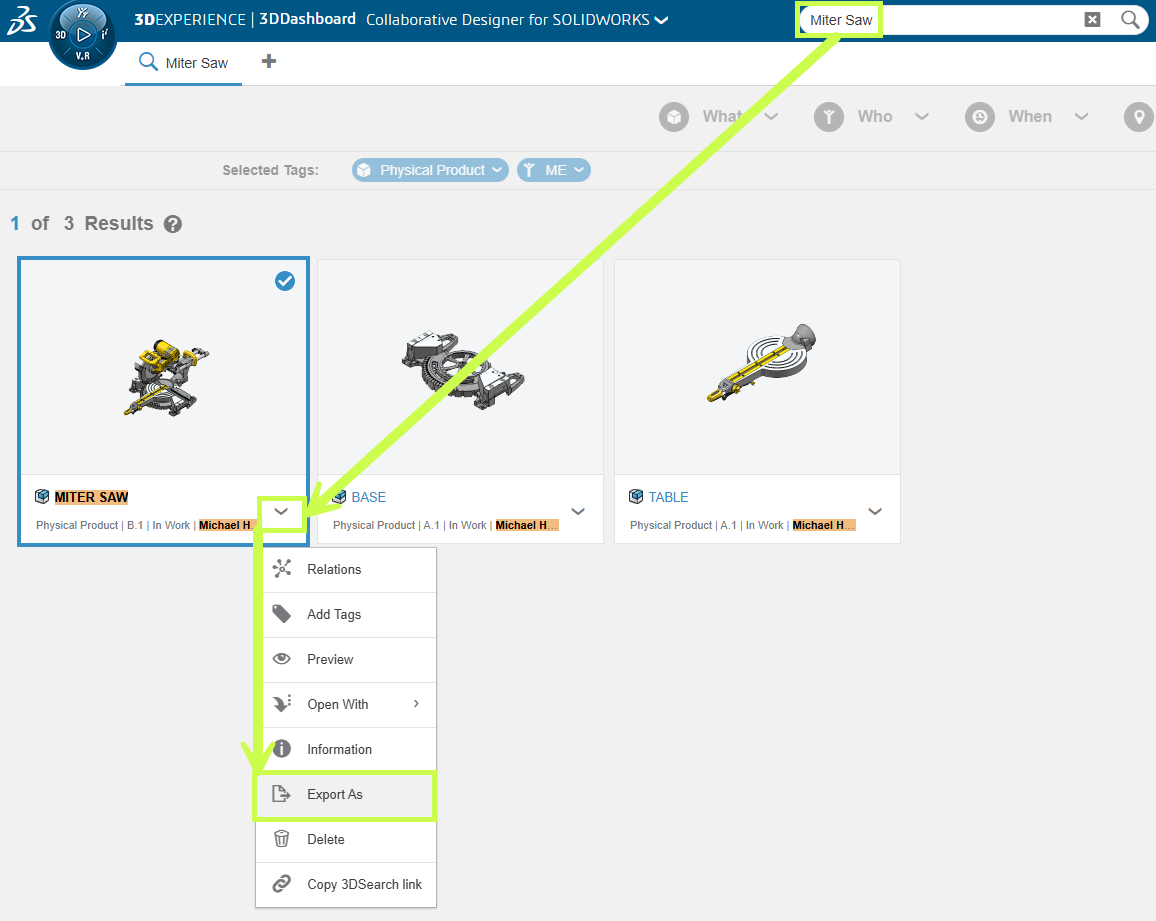
              1.Use the search field at the top of your session (or the Bookmark Editor, if you’ve bookmarked the file) to locate your top-level assembly.

              2. Select the assembly (it will highlight in blue when chosen).

              3. Click the chevron (arrow) to the right of the file.

              4. Choose Export As.

              Choose Export As.

              5. Continue with the export steps outlined in the final section of this guide.

              Option 2: Export Everything at Once

              Heads up: If you have a large dataset, this method can produce a very large zip file. For performance reasons, we often recommend Option 1,  exporting project by project.

              But if you do want the full export, here’s how:

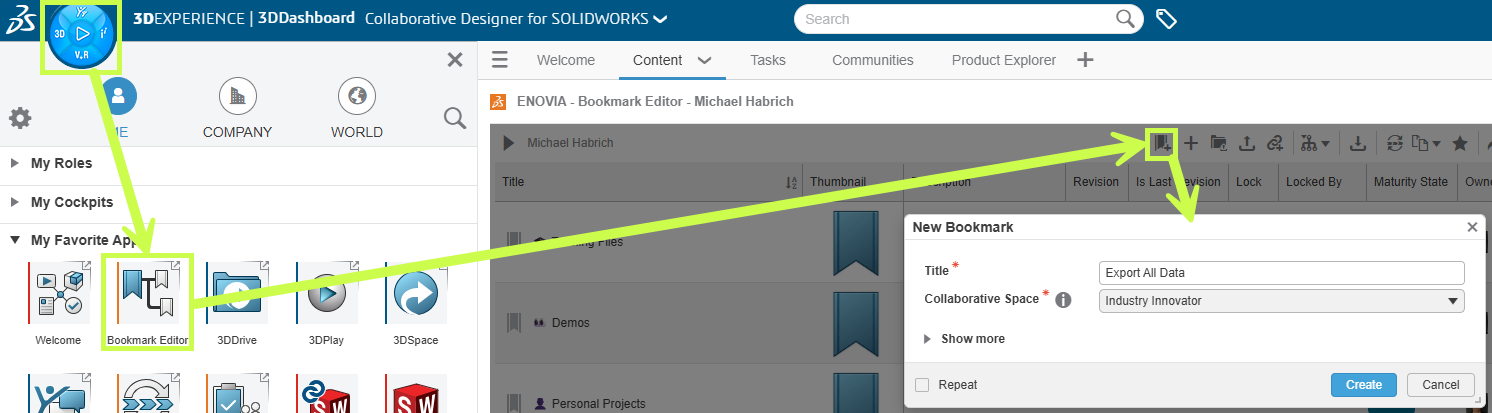
              1.Open the Bookmark Editor app.

              • Create a new bookmark called something intuitive, like Export All Data.
              • Leave Bookmark Editor open with your new bookmark selected.

              Open the Bookmark Editor app

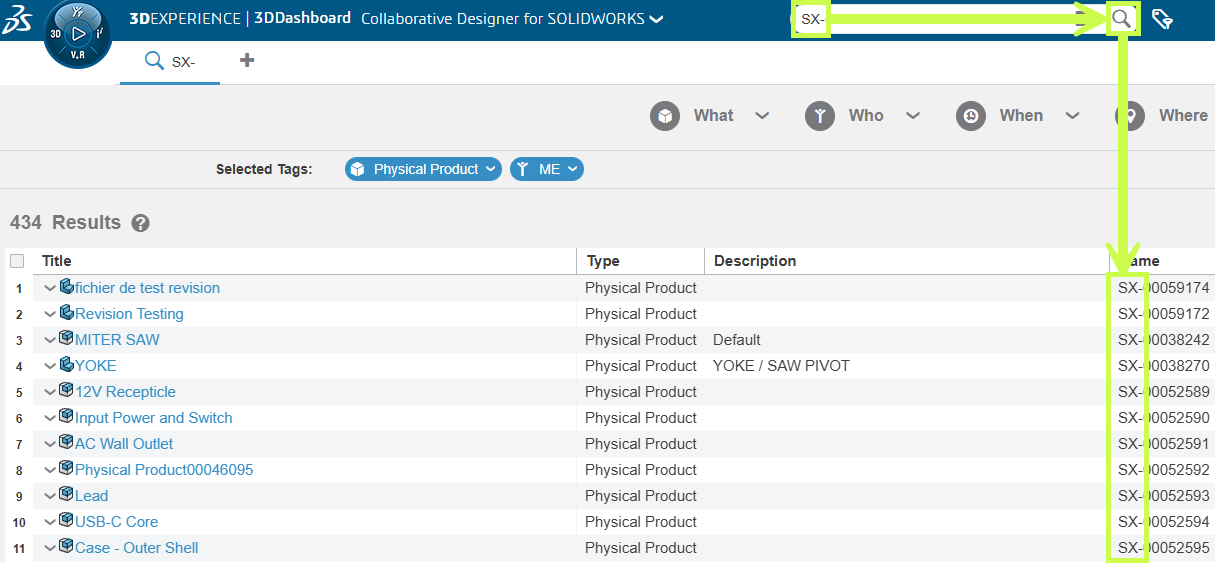
              2. In the search bar, type “prd” (default naming convention).

              • If your company uses a different convention, use the keyword that applies to your setup (e.g. SX- for Solidxperts).

              In the search bar, type “prd”

              3. Optionally, refine results with 6W Tags (Who, What, Where, etc.).

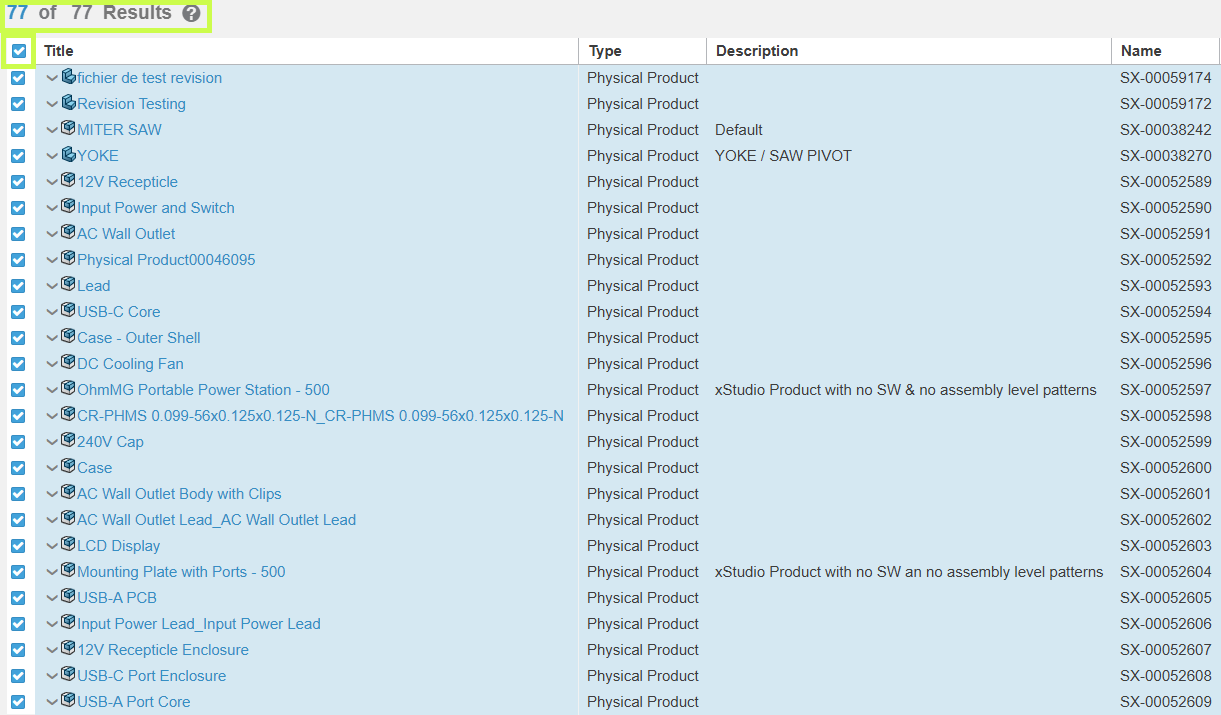
              4. Select all search results.

              • Use the checkbox at the top of the list.
              • Double-check the counter to ensure all items are selected. (If numbers don’t match, scroll to the bottom and re-select.)

              Select all search results

              5. Drag the selected files into your export bookmark.

              • This applies the bookmark to all selected items.
              • If you have a lot of files, give the system time to process.

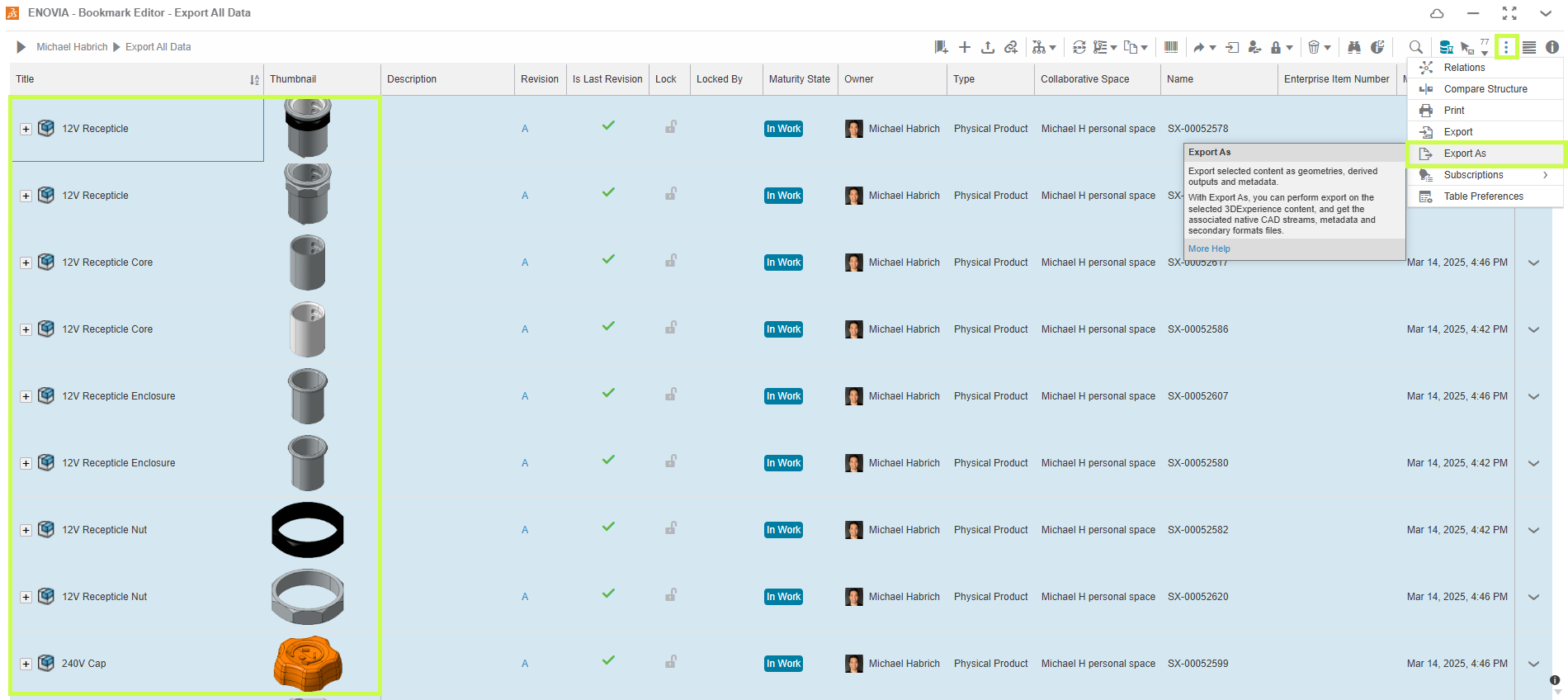
              6. Back in Bookmark Editor, group-select the files you want to export (Ctrl+A for all).

              7. Click the 3 dots (⋮) in the upper right → choose Export As.

              Click the 3 dots (⋮) in the upper right → choose Export As

              8. In the Export As dialog:

              • Give your .zip file a clear title.
              • Optionally, check Include Drawing.
              • Confirm the item count. If it looks low, scroll to the bottom of Bookmark Editor to refresh, then try again.
              • Review any exclusions in red . These could be xApp-created files (like xDesign) that aren’t currently exportable.

              9. The system creates an export job.

              • You can monitor large jobs in the CAD Data Processor Monitoring app.
              • Smaller jobs often finish before they appear there.

              The system creates an export job.

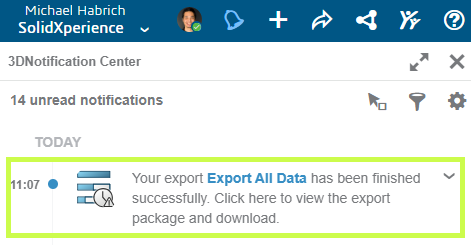
              10. Once complete, you’ll see a notification in the 3DNotification Center.

              Once complete, you’ll see a notification in the 3DNotification Center.

              11. Click the notification, then hit Download to retrieve your .zip file.

              Click the notification, then hit Download to retrieve your .zip file.

              Pro tip: Test the process with a small dataset first so you’re comfortable before running a full export.

              Wrapping Up

              Ultimately, with just a few steps, you can create local backups of your 3DEXPERIENCE projects, whether it’s one assembly at a time or your entire dataset.

              Beyond the backup process, at Solidxperts, we help teams like yours work more confidently with 3DEXPERIENCE every day. If you’d like hands-on training or tailored backup strategies, our experts are here to guide you.


              Michael Habrich

              3DEXPERIENCE Specialist

              LinkedIn

              X_green_halo

              Any questions? Need help? Ask one of our experts.

              Whether you’re ready to get started or just have a few more questions, you can contact us toll-free:
                Staying Secure with Two-Factor Authentication (2FA) in the DSx System

                BLOG

                Staying Secure with Two-Factor Authentication (2FA) in the DSx System

                [techtips_featured_image_shortcode]

                At Dassault Systèmes, keeping your account secure is a top priority. That’s why two-factor authentication (2FA) is now required when you access the DSx Client system.

                What does this mean for you? In short: an extra layer of protection for sensitive data like user information and serial numbers. It also means a quick setup process the first time you log in and after that, peace of mind knowing your account is more secure.

                This guide will walk you through:

                1. How to set up 2FA on your phone (most common method).

                2. How to set up 2FA on your computer using KeePassXC if you prefer not to use a mobile device.

                Option 1: Setting Up 2FA on Your Phone

                1. Download an Authenticator App

                If you don’t already have one, install an authenticator app such as Google Authenticator, Microsoft Authenticator, or Okta.

                Phone - Download an Authenticator App


                2. Log in to Your DS Account

                Sign in with your DS username and password.

                Log in to Your DS Account

                3. Open the 2FA Setup Wizard

                From your account, click My Profile > 2-Factor Authentication.

                Open the 2FA Setup Wizard

                4. Activate 2FA

                Select Activate to begin setup.

                Activate 2FA

                5. Set Recovery Options

                Answer the required security questions. These will be used if you ever lose access to your 2FA device.

                Set Recovery Options

                6. Connect Your Authenticator

                In your authenticator app, choose Scan a QR Code (or Enter a setup key if your phone has no camera). Scan the code provided by Dassault Systèmes.

                Connect Your Authenticator

                7. Test and Confirm

                Your authenticator will display a 6-digit code. Enter it into DSx Client to confirm setup. Once successful, you’ll see a confirmation window — 2FA is now enabled! 🎉

                Test and Confirm

                Going forward: Every time you log into DSx Client, you’ll be asked for a code from your authenticator app.

                Option 2: Setting Up 2FA on Your Computer (KeePassXC)

                Prefer not to use your phone? No problem. You can configure 2FA directly on your computer with KeePassXC, a secure, open-source password manager.

                1. Download and Install KeePassXC

                Available for Windows, macOS, and Linux at KeePassXC’s website. Default installation options work fine.

                Download and Install KeePassXC

                2.Create a Database

                This is where your passwords and tokens are stored. Set a strong master password and keep it in a safe place.

                Create a Database

                3.Add a DSx Client Entry

                Create a new entry with:

                • Title: DSx Client
                • Username, Password
                • URL: https://dsxclient.3ds.com

                Add a DSx Client Entry

                4. Set Up the 2FA Key

                Right-click your new entry > Setup TOTP. Enter the secret key provided in DSx Client (same as in the phone setup).

                5. Test and Confirm

                Click the clock icon next to your entry to generate a 6-digit code. Enter it in DSx Client. Once confirmed, your 2FA is ready to go.

                Wrapping Up

                That’s it! You’ve now secured your DSx Client account with two-factor authentication. Whether you chose to set it up on your phone or on your computer, you’re adding an important layer of protection to your Dassault Systèmes tools.

                And remember, if you hit a bump along the way, the Solidxperts team is always here to help. Reach out to us, and we’ll make sure your account stays safe and your workflow stays smooth.


                Michael Habrich

                3DEXPERIENCE Specialist

                LinkedIn

                X_green_halo

                Any questions? Need help? Ask one of our experts.

                Whether you’re ready to get started or just have a few more questions, you can contact us toll-free:

                  5 SOLIDWORKS PDM Mistakes and How to Fix Them

                  BLOG

                  5 SOLIDWORKS PDM Mistakes and How to Fix Them

                  [techtips_featured_image_shortcode]

                  SOLIDWORKS PDM is a powerful tool for managing product data, but like any system, it is only as good as its implementation. Missteps in setup, usage, or governance can result in lost time, confused teams, or even corrupted data. Let’s break down the top five mistakes users and administrators make with SOLIDWORKS PDM and provide expert-backed solutions to fix them.

                  1. Don’t Let Permissions Kill Productivity

                  SOLIDWORKS PDM folder permissions tab
                  SOLIDWORKS PDM folder permissions tab, detailing access rights within the vault. The interface displays a folder tree and a checklist of enabled actions.

                  The Pitfall: Confusing or Dangerous Access Rights
                  One of the most frequent and damaging mistakes in any PDM setup is mismanaging user permissions. When permissions are too strict, users waste time trying to access files or wait for someone with higher access to help. On the flip side, overly broad access can result in accidental overwrites, deletions, or unauthorized changes.
                  For example, an engineer could accidentally releases a work-in-progress drawing because they were mistakenly given access to the “Released” state transition. This leads to procurement ordering incorrect parts based on an outdated design.

                  The Fix: Implement Role-Based Access Control (RBAC)
                  Instead of managing individual user permissions, create user groups such as:

                  • Designers

                  • Engineers

                  • Quality Control

                  • Project Managers

                  • Manufacturing

                  Assigning permissions at the group level simplifies administration but also ensures consistency. If someone’s role changes, you just move them between groups.

                  Best Practices:

                  • Use the Permissions tool in PDM Admin to verify access levels

                  • Restrict access to critical lifecycle transitions (e.g., “Approve,” “Release”)

                  • Re-audit access rights quarterly, especially after organizational changes

                  • Keep a changelog of all admin updates to permission groups

                  Why it matters:

                  Tight control over permissions protects data integrity, reduces user frustration, and limits the risk of human error.

                  2. Are Your Workflows Helping or Hindering?

                  Customized SOLIDWORKS PDM workflow
                  A highly detailed and customized SOLIDWORKS PDM workflow, illustrating the lifecycle of engineering files, workflows like this can introduce challenges in usability, maintenance, and onboarding, highlighting the importance of balancing control with simplicity in PDM design.

                  The Pitfall: Workflows That Don’t Reflect Real-Life Processes

                  Another common issue is poorly designed workflows. Often, workflows are either overly simplistic and fail to enforce proper checks or overly complicated, leading to user confusion and delays.
                  For example, a workflow without a design review stage results in errors reaching production. Alternatively, a workflow with too many approval loops creates a bottleneck that delays time-to-market.

                  The Fix: Design Smart, Flexible Workflows

                  Good workflows reflect how your team actually works. Start by mapping out real-world processes on paper. Then replicate those with SolidWorks PDM using tools like:

                  • Conditional Transitions

                  • Automatic Status Changes

                  • Notifications (via Dispatch or Task Add-ins)

                  Pro Tips:

                  • Include mandatory review steps before “Release”

                  • Create a sandbox or test vault to trial new workflows without disrupting production

                  • Practice using screen recordings or internal guides to walk through common workflows. Even the best workflow cannot help if users don’t understand it.

                  3. Stop the Chaos: Fix Your Revision Control

                  The Pitfall: Manual File Naming and Confused Versioning

                  Few things frustrate engineers more than working on the wrong version of a file. Common issues include:

                  • Duplicate files with suffixes like _final, _v2, _approved

                  • Broken references from renamed assemblies

                  • No clear revision history when questions arise

                  For example, a supplier receives an outdated drawing marked “FINAL_v3,” but the design team had already created “FINAL_v4” in a separate folder. Which results in countless dollars wasted and scrap material.

                  The Fix: Use PDM’s Automated Version and Revision Tools

                  SOLIDWORKS PDM is built to manage versions and revisions intelligently when used properly. By integrating revision control into your workflow transitions, you can track every change and automatically increment revisions when files pass certain gates such as “Approve.”

                  Steps to Implement:

                  • Set up lifecycle states (e.g., Under Review → Approved → Released)

                  • Configure transitions to increment revisions automatically

                  • Use the built-in History tab to track who made what changes and when

                  • Apply revision tables linked to metadata to eliminate manual edits on drawings

                  Important Tips:

                  • Disable file renaming at the user level

                  • Avoid copying files outside PDM to test changes; instead, use sandbox folders within the vault

                  • Regularly purge obsolete versions to avoid clutter

                  Result:

                  Accurate, tamper-proof versioning builds trust across design, QA, and manufacturing teams.

                  4. Organize or Agonize: Clean Up That Vault

                  SOLIDWORKS PDM Vault interface
                  SOLIDWORKS PDM Vault interface, featuring a typical folder structure on the left and project metadata displayed in a custom data card below.

                  The Pitfall: Messy Folders, Inconsistent File Names, and Confusing Structures

                  Without naming conventions or a logical file system, even experienced users can spend hours hunting for the right file or, worse, use the wrong one.

                  For example, a project folder contains new_final, revA_drawing, Drawing1, and final_FINAL. No one knows which to use, and a new engineer duplicates the wrong one for a new design.

                  The Fix: Standardize File Naming and Folder Structures

                  Consistency is key to finding and managing data efficiently. Develop a file naming convention that reflects your project hierarchy and revision status.

                  Sample Naming Structure:

                  • PRJ2025_ClampBracket_REV_B.SLDPRT

                  • DWN1001_ClampBracket_REV_B.SLDDRW

                  Tips to Maintain Order:

                  • Enforce naming rules with Data Cards

                  • Use “Copy Tree” for project duplication to auto-rename and preserve links

                  • Document your structure in an internal wiki or onboarding guide

                  Bonus:

                  Create folder templates tied to project types (e.g., Customer Jobs, R&D, Internal Use) to speed up setup and reduce human error.

                  5. One Crash Away: The Backup Plan You Wish You Had

                  The Pitfall: No Backup or Worse, Unusable Backups

                  It is easy to assume your IT team has your back until a vault crash or server failure proves otherwise. Even if backups exist, they may be incomplete, outdated, or impossible to restore.
                  For example, your server crashes on a Friday night. IT discovers that the last backup was from three weeks ago and only covers the SQL database, not the archive files.

                  The Fix: Build a Complete, Tested Backup and Recovery Plan

                  A proper backup strategy must cover all components of SOLIDWORKS PDM:

                  • SQL Database

                  • Archive Server

                  • Vault Settings (via the Admin tool)

                  Checklist for Backup Success:

                  • Back up daily using Windows Task Scheduler or enterprise tools

                  • Store backups off-site or in the cloud for disaster recovery

                  • Simulate a full restore every quarter and document the steps

                  Disaster Recovery Plan Should Include:

                  • Contact info for key stakeholders

                  • Timeline for each recovery step

                  • Inventory of hardware and software requirements

                  • A change log for vault structure

                  Crucial Question:

                  • If a critical client asks, “How quickly can you restore if the vault crashes?” do you have an answer you trust?

                  Bonus Mistake: Skipping Training and Internal Communication

                  Even the best-configured PDM system will not deliver value if users do not understand how to use it. Inconsistent user behavior leads to data quality issues, broken workflows, and user frustration.

                  Fix it with:

                  • Scheduled team-wide PDM refresher sessions

                  • A living document library of video walkthroughs and SOPs

                  • Feedback loops such as a Slack or Teams channel for PDM issues

                  Pro Tip:

                  • Use anonymous surveys to surface pain points or confusion that might not come up in meetings.

                  Stop Mistakes Before They Start

                  SOLIDWORKS PDM is not just a file storage system. It is the foundation of your product development lifecycle. Like any foundation, it requires care, structure, and proactive management. By recognizing and correcting the most common PDM mistakes, whether it is permissions, workflows, revisions, organization, or backup planning, you set your team up for success.

                  Takeaway Checklist:

                  • Role-based permissions

                  • Streamlined, mapped workflows

                  • Automated revision control

                  • Standardized file and folder naming

                  • Complete, tested backup plan

                  • Ongoing user training

                  Each of these practices improves traceability, compliance, and efficiency. Saving you time, money, and stress in the long run.


                  Riccardo

                  Riccardo Biciola

                  Solutions Specialist

                  X_green_halo

                  Any questions? Need help? Ask one of our experts.

                  Whether you’re ready to get started or just have a few more questions, you can contact us toll-free:

                    Validate your design with a SOLIDWORKS Simulation drop test

                    BLOG

                    Validate your design with a SOLIDWORKS Simulation drop test

                    [techtips_featured_image_shortcode]

                    A few weeks ago, my SOLIDWORKS Elite Applications Engineer award fell, and the top part of it broke. I was both sad and frustrated. Sad because it meant something to me, and frustrated because I had placed it on a shelf that later tilted unexpectedly, sending everything crashing to the floor. Finding it broken on the ground that day was tough.

                    Accidents like this happen all the time. The products we design are also at risk of being dropped, so why not make them as resistant as possible?

                    That’s exactly where SOLIDWORKS Simulation drop tests come in.

                    In this guide, you’ll learn:

                    • what a drop test is,
                    • why drop test analysis is essential for product reliability,
                    • and how to run a drop test in SOLIDWORKS Simulation step by step.

                    Chung Ping's Award

                    Why Drop Tests Matter for Product Design?

                    Any time a product is handled, shipped, carried, or installed, there’s a chance it could be dropped. A single impact can compromise safety, durability, performance, and sometimes even a company’s reputation.

                    Drop tests help engineers predict how their products will behave in real-world accident scenarios. Below are examples of industries where drop testing is essential to ensure reliability before manufacturing:

                    • Consumer products & electronics
                    • Industrial & heavy equipment
                    • Medical devices
                    • Sports equipment
                    • Aerospace & aviation
                    • Automotive & transportation
                    • Military & defense
                    • Packaging & logistics
                    • Robotics & automation
                    • Construction & civil engineering

                    Drop Test Prerequisites: What You Need Before Running a Simulation

                    Before running a drop test analysis, certain elements must be prepared. A 3D design is required to simulate the event digitally. Here are the steps:

                    1. Create the 3D model in SOLIDWORKS or import an existing geometry.
                    2. Apply materials (this step can also be performed directly in the study).
                    3. Simplify the model to reduce solving time (this may include suppressing non-critical parts or features).

                    How to Run a Drop Test Analysis in SOLIDWORKS Simulation

                    Once your model is ready, you can set up the drop test using the following steps:

                    1. Enable the SOLIDWORKS Simulation add-in.
                    2. Create a new Drop Test study.
                    3. Apply any missing material properties.
                    4. Define interactions if needed.
                    5. Set up the drop test conditions (drop height or impact velocity, orientation, ground parameters, etc.).
                    6. Adjust result options (duration after impact, saving options, etc.).
                    7. Mesh the model and run the analysis.

                    List of required steps of a drop test analysis

                    Interpreting Your Drop Test Results

                    After running the analysis, several result types become available, such as stress and deformation plots. These help you determine whether the product will remain elastic, undergo plastic deformation, or potentially fail, and where such failures are likely to occur.

                    The example below shows the kind of output SOLIDWORKS Simulation provides once the calculations are complete:

                    Stress results of the drop test


                    Improving the Design Through Simulation

                    Thanks to the results, you can identify weak points where the product is likely to fail. You can then reinforce the design. For example, by adding fillets, increasing wall thickness, or selecting a stronger material.

                    Sometimes, results show that a part is overdesigned. In these cases, you may reduce thickness or remove unnecessary material to lower weight and cost. This is a key step in optimizing your product.

                    Simply make the changes and re-run the drop test to validate the improvements.


                    Bringing It All Together: Stronger Designs Through Simulation

                    With SOLIDWORKS Simulation, you can test your product digitally long before manufacturing it. A drop test is just one of many analysis types available to help you validate performance and reliability.

                    I initially blamed myself for the broken award, but maybe if the shelf had been designed to be stronger, the accident could have been avoided. Who knows?

                    From linear static to nonlinear dynamic analyses, SOLIDWORKS Simulation provides a complete suite of tools to help engineers validate their designs efficiently. At Solidxperts, we are committed to helping our customers achieve excellence in their engineering projects.

                    Looking to sharpen your skills? Browse our upcoming trainings, available at our offices or online. Whether you’re new to simulation or ready to deepen your expertise, our certified specialists are here to support you every step of the way.


                    Chung Ping Lu, eng.

                    Chung Ping Lu, eng.

                    Senior Technical Representative

                    X_green_halo

                    Any questions? Need help? Ask one of our experts.

                    Whether you’re ready to get started or just have a few more questions, you can contact us toll-free:
                        Download

                          Download

                            Download